Guides · Steinhatchee, Florida
Steinhatchee in Hurricane Season: What to Know
Steinhatchee doesn't hide from hurricane season. It works through it.
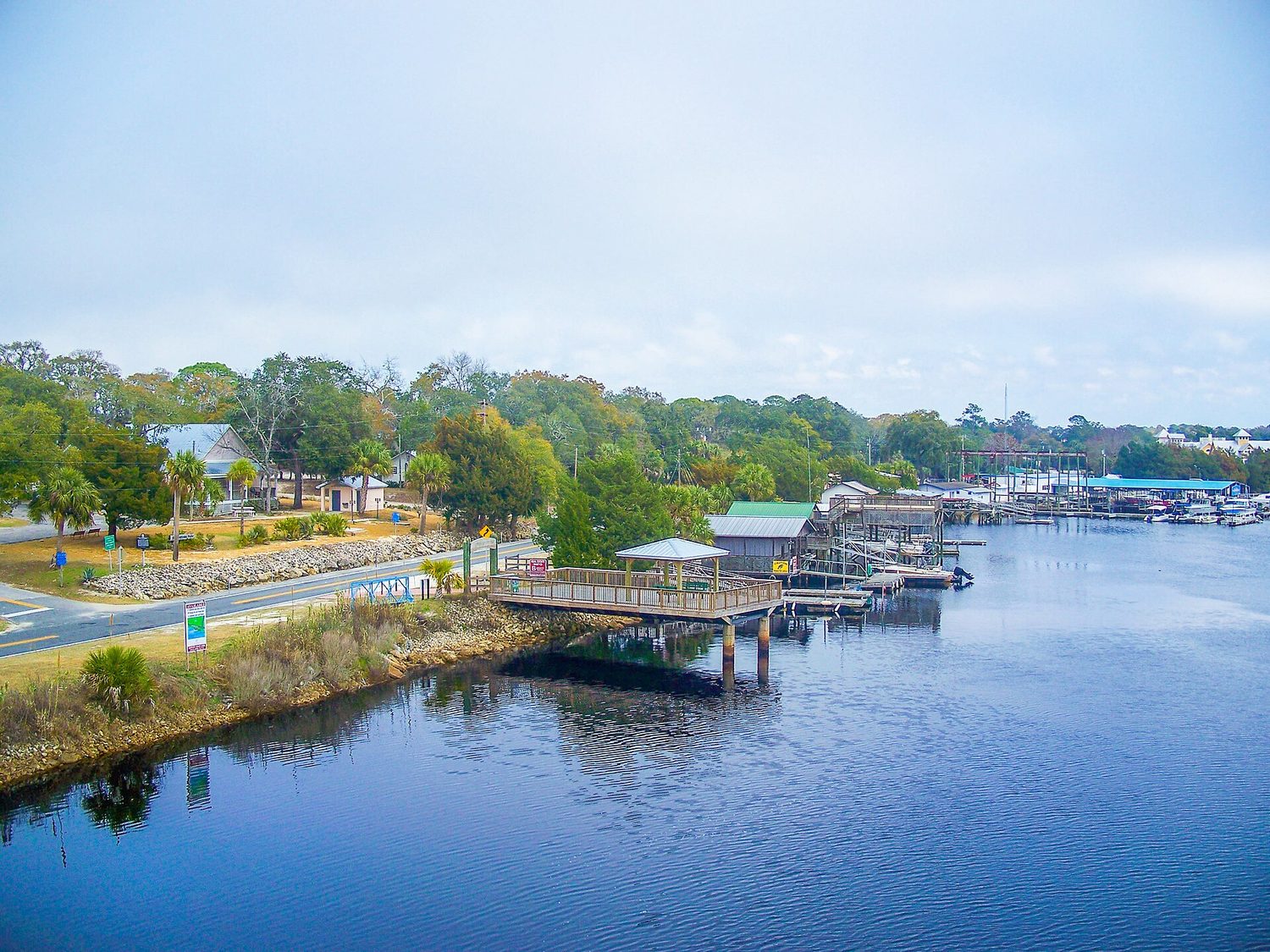
The River of Man and the Working Water
The town grew where the Steinhatchee River meets the Gulf. The name comes from the Native American esteen-hatchee—river of man. Indians, explorers, Civil War soldiers, sponge divers and commercial fishermen all gathered here in turn, drawn by the river, Deadman's Bay and the Gulf beyond. That working character never left. Commercial fishing built the village and still sustains it; many locals continue to ply the Gulf for their livelihood. This is not a resort town with a marina bolted on. It is a waterfront work camp that happens to have good scalloping.
The river itself runs 2.5 miles from town to open Gulf. Deadman's Bay, the shallow embayment at the river's mouth, gives the village its scallop grounds and its fishing. When the tide moves, the town moves with it.
Scallop Season Runs Straight Through the Storm Months
Bay scalloping is the summer draw, and the season sits right in the middle of hurricane risk. In 2019 it ran from 15 June to 10 September. The shallow flats of Deadman's Bay fill with families working the grass beds by hand—mask, snorkel, mesh bag, no boats needed for most of it. You wade. You feel for scallops. You drop them in the bag and do it again.
That makes summer the busiest time of year, even as the tropics heat up. The same warm water that grows scallops also feeds storms. Residents and visitors accept that trade. The season is short, the harvest is good, and the weather forecast is part of the daily routine.
Steinhatchee's Population Swells in Summer, Then Empties Out
Steinhatchee has 1,637 total housing units, and 1,220 of them are vacant. Of those, 1,043 are held for seasonal or recreational use. The year-round population is 770 people, with a median age of 63. Median home value sits at $255,600, median household income at $48,208. Unemployment is at 0 percent.
The vacancy numbers are not decay. They are the shape of a place that swells in summer and shrinks after the last scallop is bagged. The 0 percent unemployment rate reflects a working population that doesn't have the luxury of leaving. The high median age reflects people who came for the water and stayed for the quiet.
How Locals and Visitors Handle Hurricane Season in Steinhatchee
Steinhatchee is low-lying and exposed. There is no bluff to hide behind. Locals monitor forecasts the way other towns monitor stock tickers. When a storm forms in the Gulf, the question is not if you leave but when. Evacuation routes are known. The rhythm of the town is tied to the Gulf's moods—calm flats one day, whitecaps the next.
Visitors who come in summer should do the same. Check the National Hurricane Center before you leave, check local advisories while you are there, and have a plan that does not depend on a bridge staying open. The town does not pretend otherwise. It is a working waterfront, and working water is never fully tame.
Beyond Summer: The Fiddler Crab Festival and the Off-Season
When the scallop crowds go home, Steinhatchee does not shut down. The Fiddler Crab Festival anchors the quiet months every February—three days built around a parade, fireworks on both Friday and Saturday nights, a car show, a fishing tournament, river tours and a cooking competition. The 2027 edition is the 19th, which means the festival has been running long enough to feel like part of the town's calendar rather than a promotional stunt.
The off-season also opens the door for day trips. Perry, 32 miles away, hosts the Florida Forest Festival. Cedar Key, 44 miles out, runs the Cedar Key Seafood Festival. St. George Island, Apalachicola, Dade City and Port St. Joe are all within a two-hour drive, each with its own festival anchor.
Steinhatchee by the Numbers
| Statistic | Value |
|---|---|
| Population | 770 people |
| Median age | 63 years |
| Total housing units | 1,637 units |
| Vacant housing units | 1,220 units |
| Seasonal/recreational homes | 1,043 units |
| Median home value | $255,600 |
| Median household income | $48,208 |
| Unemployment rate | 0 percent |
| Bachelor's degree or higher | 24.9 percent |
Is it safe to visit during hurricane season? Safe enough if you watch the sky and respect the road out. What else is there to do besides scalloping? Fish, boat the river, work the flats, or just watch the tide. Why so many vacant homes? Because most of them are seasonal, and the town is built for summer. What is the Fiddler Crab Festival? A February weekend of parade, fireworks and river tours. How does the working waterfront shape the experience? It keeps Steinhatchee honest—no pretense, no polish, just a river, a bay and people who work both.
Common questions
- When is scallop season in Steinhatchee?
- Scallop season runs across high summer. In 2019 it ran from June 15 to September 10. That's when the shallow flats fill with families working the grass beds by hand. Check current dates each year.
- What is there to do in Steinhatchee besides scalloping?
- People come for the river and Deadman's Bay. You can fish, boat, or just wade the flats. The Fiddler Crab Festival happens three days in February with a parade, fireworks, car show, and fishing tournament.
- Is Steinhatchee a good place to buy a vacation home?
- Many homes are for seasonal use—1,043 of 1,637 housing units. The median home value is $255,600. But 1,220 units are vacant, so the town is quiet much of the year. Population is just 770, median age 63.
- How far is Steinhatchee from the Gulf?
- The open Gulf is 2.5 miles downstream from the river mouth. Deadman's Bay is the shallow embayment right at the river's mouth, giving the village its scallop grounds and fishing.
- What is the history of Steinhatchee?
- The name comes from the Native American 'esteen-hatchee', meaning river of man. Indians, explorers, Civil War soldiers, sponge divers, and commercial fishermen all gathered here. Commercial fishing still sustains the village.
- Can I visit Steinhatchee during hurricane season?
- Hurricane season runs June through November, overlapping scallop season. The town is working-water plain, so be ready to leave if a storm comes. Check forecasts; many homes are vacant and not built for hurricanes.
Every business named above is one we hold a listing for, and every date traces to a source on our sources page. We do not describe menus, interiors or service we have not verified. Details change — confirm before you travel.