Guides · Steinhatchee, Florida
Steinhatchee, FL: Reading the Town's Buildings and River
Steinhatchee is a town you read through its working parts: the docks, the ramps, the sheds, and the river that put them there.
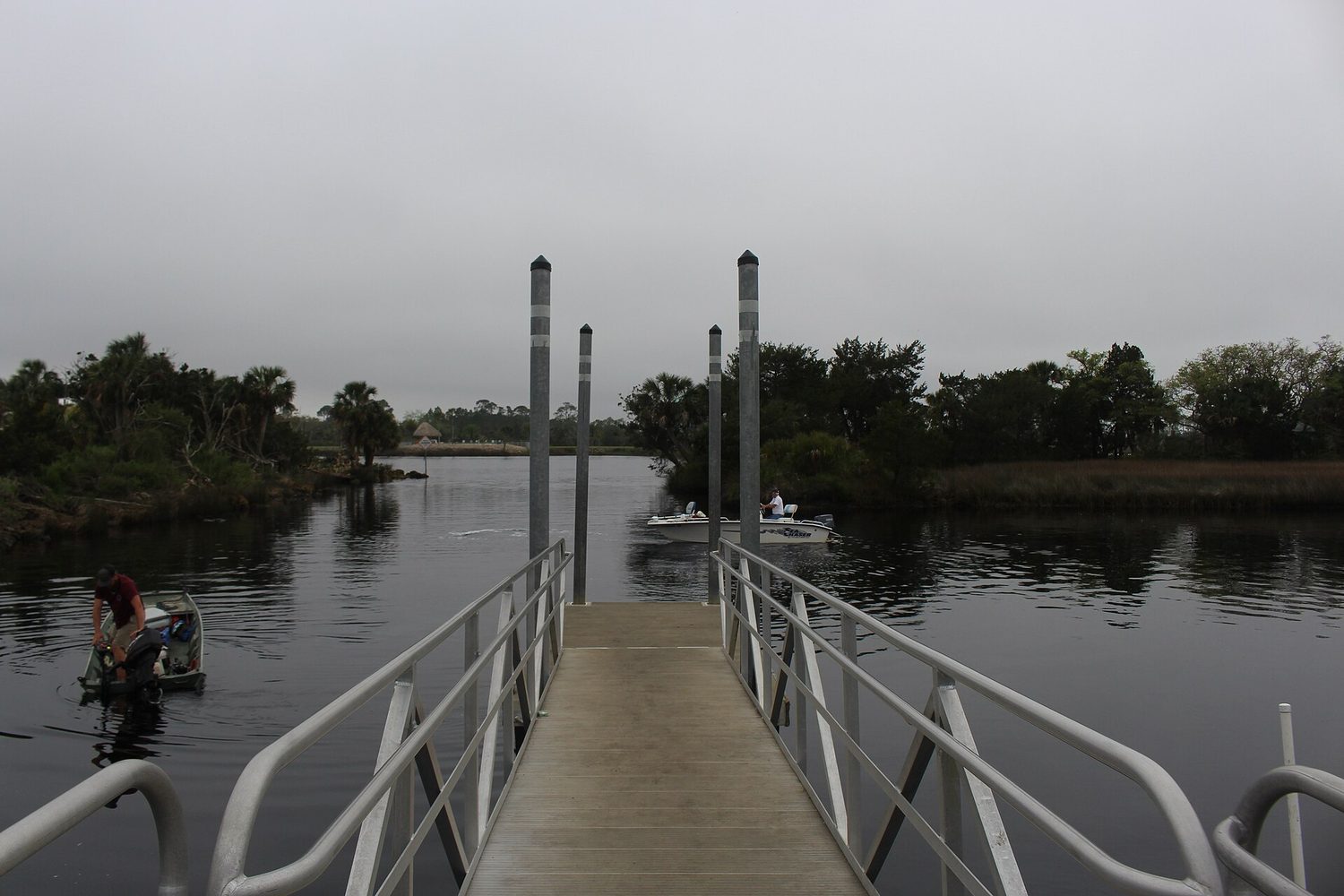
How the Steinhatchee River Shaped the Town
The Steinhatchee River runs 2.5 miles from the open Gulf to the town's doorstep. That short stretch of water is the whole story. The river's mouth spills into Deadman's Bay, a shallow Gulf embayment that gives the village its scallop grounds and its fishing. Before there was a town, there was this meeting of fresh and salt water, and it drew people in turn: Indians, explorers, Civil War soldiers, sponge divers, and commercial fishermen. The name itself is a record of that first claim. It comes from the Native American esteen-hatchee, meaning river of man. The geography decided who came and what they did when they got here. The river built the place before anyone laid a foundation.
Steinhatchee's Working Waterfront: Commercial Fishing Town
Commercial fishing built Steinhatchee and still sustains it. Many locals continue to ply the Gulf for their livelihood, and the buildings show it. This is not a town that dresses itself for visitors. What you see are the functional markers of a fishing economy: working docks where boats tie up after a day on the water, ice houses that keep the catch cold, and processing sheds where the work of cleaning and packing happens. These are structures built for use, not for show. They face the water, not the street. If you read the buildings as evidence, they all point the same way: toward the bay and the Gulf beyond.
Scallop Season in Steinhatchee: What to Expect
The character of the town changes hard when scallop season opens. In 2019, the season ran from 15 June to 10 September, and that pattern holds across high summer. The shallow flats of Deadman's Bay fill with families working the grass beds by hand, wading in water that rarely gets deep. The town, built for a few hundred permanent residents, suddenly has to absorb thousands. The housing stock turns over to seasonal use. The working waterfront gets a second job as a launch point for recreational fleets. The town does not become something else during those months; it simply runs hotter. The water is still the reason everyone is there.
Steinhatchee Housing Stats: A Seasonal Town by the Numbers
The census figures tell the same story as the buildings. Steinhatchee has 1,637 total housing units, but only about 770 people live here full time. Of those units, 1,220 are vacant—and 1,043 are held for seasonal or recreational use. The math is plain: most of the town is built for people who are not here most of the year. The median age is 63, and the median home value is $255,600. This is not a town of young families trying to get in. It is a town of older residents, a working water economy, and a summer influx that fills the empty rooms. The vacancy is not abandonment. It is the shape of a seasonal town.
Steinhatchee Demographics and Housing Data
| Measure | Value |
|---|---|
| Population | 770 people |
| Total housing units | 1,637 units |
| Homes held for seasonal or recreational use | 1,043 units |
| Vacant housing units | 1,220 units |
| Median age | 63 years |
| Median household income | $48,208 |
| Median home value | $255,600 |
| Bachelor's degree or higher | 24.9 percent |
| Unemployment rate | 0 percent |
Fiddler Crab Festival in Steinhatchee: February Event Guide
When scallop season ends, the town does not go quiet—it throws a festival. The Fiddler Crab Festival runs three days in February, built around a parade, fireworks on both Friday and Saturday nights, a car show, a fishing tournament, river tours, and a cooking competition. The 2027 edition will be the 19th. It is a winter gathering for a summer town, a chance for the permanent population to fill the streets themselves. The river still anchors the schedule: river tours and a fishing tournament keep the water at the center of it. This is community life outside the scallop rush, and it shows a town that knows how to work and how to pause.
Steinhatchee's Future: Working Waterfront and Community
The numbers and the buildings point the same direction. Steinhatchee's economy is still tied to the water—commercial fishing year-round, scalloping in summer, and the festival in February. The permanent population is small, older, and fully employed. The unemployment rate is 0 percent. The median household income is $48,208. The vacant homes are not a sign of decline; they are the mechanism that lets the town swell in summer and shrink back in fall. The buildings are not monuments. They are tools. As long as the river runs to the Gulf, the town has a reason to be here.
Common questions
- When is scallop season in Steinhatchee?
- Scallop season runs across high summer. In 2019 it ran from June 15 to September 10. That's when the shallow flats fill with families working the grass beds by hand. Check current dates each year.
- What is Steinhatchee known for?
- Steinhatchee is a bay-scalloping town. It grew where the river meets the Gulf. Indians, explorers, Civil War soldiers, sponge divers, and commercial fishermen all gathered here. The name means river of man.
- How far is Steinhatchee from the Gulf?
- The open Gulf is just 2.5 miles downstream on the Steinhatchee River. Deadman's Bay, the shallow embayment at the river's mouth, gives the village its scallop grounds and its fishing.
- Is Steinhatchee a real working town?
- Yes. Commercial fishing built the village and still sustains it. Many locals continue to ply the Gulf for their livelihood. It's not a resort. It's a working-water plain.
- What is the Fiddler Crab Festival?
- It's a three-day festival in February. It has a parade, fireworks on Friday and Saturday nights, a car show, a fishing tournament, river tours, and a cooking competition. The 2027 edition is the 19th.
- What's the population of Steinhatchee?
- About 770 people live here. The median age is 63. Many homes are for seasonal or recreational use—1,043 of 1,637 housing units. The unemployment rate is 0 percent.
Every business named above is one we hold a listing for, and every date traces to a source on our sources page. We do not describe menus, interiors or service we have not verified. Details change — confirm before you travel.