Guides · Steinhatchee, Florida
The History of Steinhatchee in 6 Landmarks
The river does not run to the town. The town runs to the river.
The River Itself
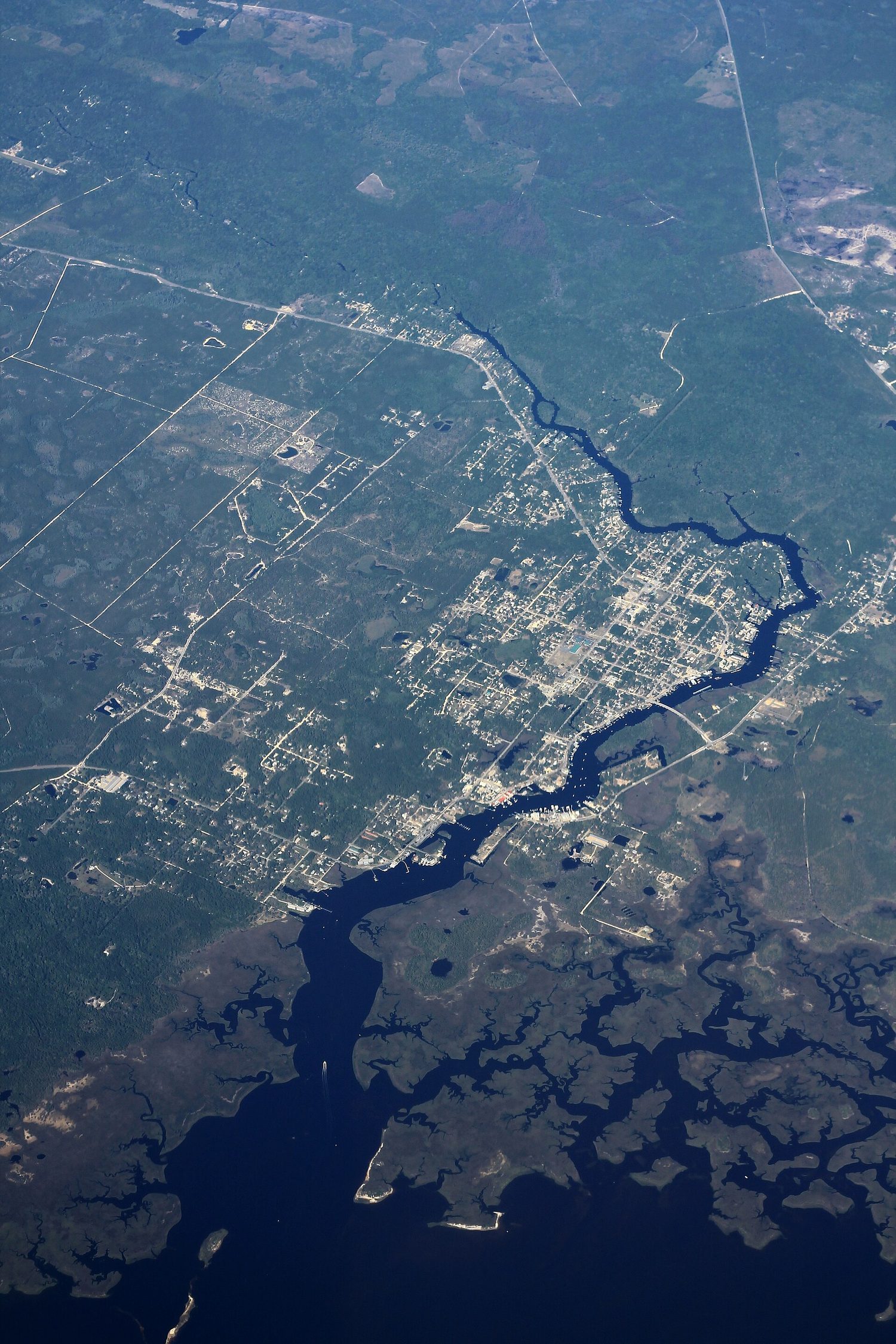
Steinhatchee is not a place you arrive at by accident. It is a place you arrive at because the water stops being land. The Steinhatchee River pulls out of the pine flats and cypress heads, gathers itself, and then hits the Gulf 2.5 miles downstream of the village. That short run is the whole argument for the town's existence.
The name is older than any structure here. It comes from the Native American esteen-hatchee. River of man. Not a man, not a chief, not a battle. Just man. The river was the highway, the pantry, and the meeting ground. Indians came to it. Explorers came to it. Civil War soldiers came to it. Sponge divers came to it. Commercial fishermen came to it. They all came because the river gave them a way out to the Gulf and a way back in.
Deadman's Bay
The river does not spill straight into open water. It empties into Deadman's Bay, the shallow embayment that sits at the river's mouth. The name sounds like a warning. It is not. The bay is the town's working floor.
The bay is what makes Steinhatchee a scalloping town. The grass beds in the shallows hold the scallops, and the scallops hold the summer economy. The season runs across high summer. In 2019, it ran from 15 June to 10 September. When it opens, the flats fill with families. They wade in from the launch ramps, bend over, and work the grass beds by hand. No dredges. No boats needed. Just a mask, a net bag, and the patience to stand in warm water looking down.
The bay is also the fishing ground. Commercial fishermen still work it, the way their predecessors did. The boats are small. The work is physical. The bay does not give up its catch easily, but it gives up enough to keep the village alive.
The Working Waterfront
There is no boardwalk. There is no marina village with boutiques. There is a working waterfront, and it looks like one. The docks are practical. The boats are workboats. The fish houses and bait shops are there to serve the people who make a living on the water, not the people who want to look at it.
Commercial fishing built the village. It still sustains it. Many locals continue to ply the Gulf for their livelihood. The catches change with the season: grouper, scallops, stone crab, shrimp. The boats leave before dawn. They come back in the afternoon. The cycle is old and it does not change much.
The Seasonal Houses
The census numbers tell a story the docks do not. Steinhatchee has 1,637 total housing units. Of those, 1,043 are held for seasonal or recreational use. More than 1,200 units sit vacant for much of the year.
The town has 770 permanent residents. The median age is 63. The population swells in summer, when the seasonal houses open and the scallop families arrive. In February, the Fiddler Crab Festival pulls the town together for three days. It has a parade, fireworks on Friday and Saturday nights, a car show, a fishing tournament, river tours, and a cooking competition. The 2027 edition will be the 19th. It is the one time of year the town fills up for a reason other than the water.
The seasonal houses are not a sign of decline. They are a sign of what the town is for. People buy here because they want the water. They come for the summer. They leave the rest of the year. The town is built for that rhythm.
The River Launch
The public boat ramp on the river is the busiest piece of ground in town during scallop season. It is not a resort facility. It is a concrete slab with a parking lot. It is the place where the families back their trucks down, drop their boats in, and head for the grass flats.
The launch is also the gateway for the river itself. Paddlers put in there and head upstream, away from the bay, into the dark water and the cypress. The river is wide enough and slow enough for a kayak. The Gulf is a straight shot downstream. The launch serves both.
This is where the town's two lives meet. The commercial fishermen use the river to reach the Gulf. The recreational crowd uses it to reach the scallop beds. Both use the same water. Both use the same ramp. They just go different directions.
The Village Core
The town proper is not much to look at, and that is the point. A couple of roads. A few blocks of businesses. The houses sit back off the water. The town does not try to impress you with architecture. It impresses you with access.
The census data fills in the picture. The median home value is $255,600. That is not a cheap coastal town. It is also not a wealthy one. The median household income is $48,208. The unemployment rate is 0 percent. The town works, even if the work is seasonal and hard.
Only 24.9 percent of residents hold a bachelor's degree or higher. That is not a statistic of failure. It is a statistic of a working town. People here do not need a degree to run a boat, fix a motor, or clean a fish. They need a skill and a tolerance for salt water.
The Future
Steinhatchee does not market itself. It does not call itself undiscovered. It is not a hidden gem. It is a known quantity to anyone who has waded a grass flat in August. The river keeps running. The bay keeps holding scallops. The boats keep going out.
The town will not be transformed. It cannot be. The water depth, the river width, and the bay's character set the limits. The seasonal houses will keep filling in summer. The permanent residents will keep working the Gulf. The festival will keep drawing the crowds in February.
Six landmarks. None of them are monuments. All of them are functions. The river is the reason. The bay is the workplace. The waterfront is the infrastructure. The seasonal houses are the summer economy. The launch is the door. The village core is the support system.
That is the history of Steinhatchee. It is not a story of buildings. It is a story of water, and the people who figured out how to live on it.
Every business named above is one we hold a listing for, and every date traces to a source on our sources page. We do not describe menus, interiors or service we have not verified. Details change — confirm before you travel.